PECTIN
The fruit's own glue
Pectin is a plant carbohydrate that absorbs water and makes the gel. The best is in just-ripe fruit; pectin from under-ripe or over-ripe fruit will not set.
Check your fruit soundboardjam
THE SCIENCE OF A SET
A good jam is a small piece of food chemistry.
Check a fruit
SET POINT8°F above boiling
Pectin from the fruit, acid and sugar have to meet in the right proportions and be boiled to the right point. Get the balance wrong and the same pan gives you syrup, or rubber.
At a glance
220°F
Jelly point at sea level
That is 8°F above the boiling point of water, about 104°C. For each 1,000 feet above sea level, take off 2°F, because water boils at a lower temperature.
SET POINT · NCHFP
≥ 60%
Soluble solids in jam
England's Jam and Similar Products Regulations 2003 require jam to have at least 60% soluble dry matter, measured by refractometer, unless it is labelled reduced sugar.
JAM RULES · ENGLAND
TWO NUMBERS WORTH KNOWING
One number for the pan,
one for the label on a shop jar.
The same regulations say jam must use at least 350 g of fruit for every 1,000 g made (for most fruits) and extra jam at least 450 g.
A QUICK FRUIT CHECK
Pick a fruit to see how much help it usually needs to set. The bar shows how likely you are to need added pectin or lemon juice.
Based on the US National Center for Home Food Preservation's pectin and acid groups. Ripeness changes the picture, so follow a tested recipe.
THE SHORT ANSWER
Fruit brings flavour and some of the pectin and acid.
Sugar and boiling do the rest.
PECTIN
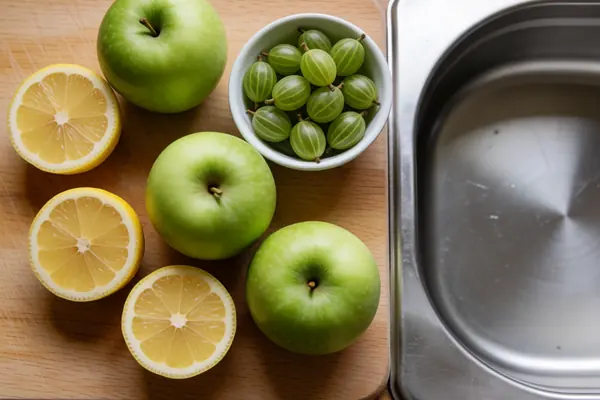
Pectin is a plant carbohydrate that absorbs water and makes the gel. The best is in just-ripe fruit; pectin from under-ripe or over-ripe fruit will not set.
Check your fruitACID AND SUGAR
Ordinary pectin gels only with plenty of sugar and acid, at a pH of roughly 2.8 to 3.5. Sugar is also the preservative, so tested recipes say not to cut it.
See the numbersTHE SET
At sea level jam without added pectin is done at 220°F, 8°F above water's boiling point. A cold plate in the freezer is the low-tech check.
How to test
THREE WAYS TO TEST
Jam thickens as it cools, so you are looking for the point just before it looks finished. The guidance gives three tests; the thermometer is the most dependable.
Hold a jam or sugar thermometer upright, bulb fully covered but off the bottom of the pan, and boil to 220°F at sea level. Check it first in boiling water.
Lift a cool metal spoon out of the steam. Early drops are light and syrupy; at the set they run together and slide off as a sheet.
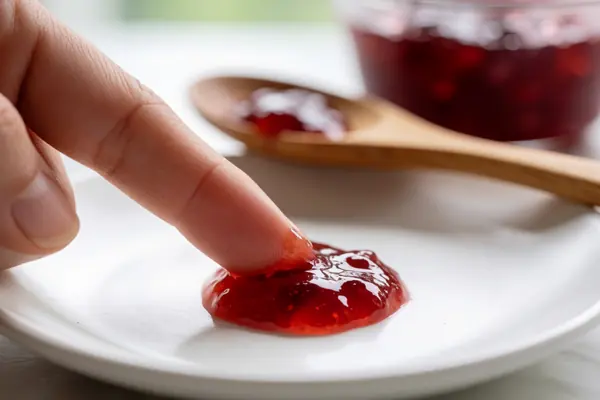
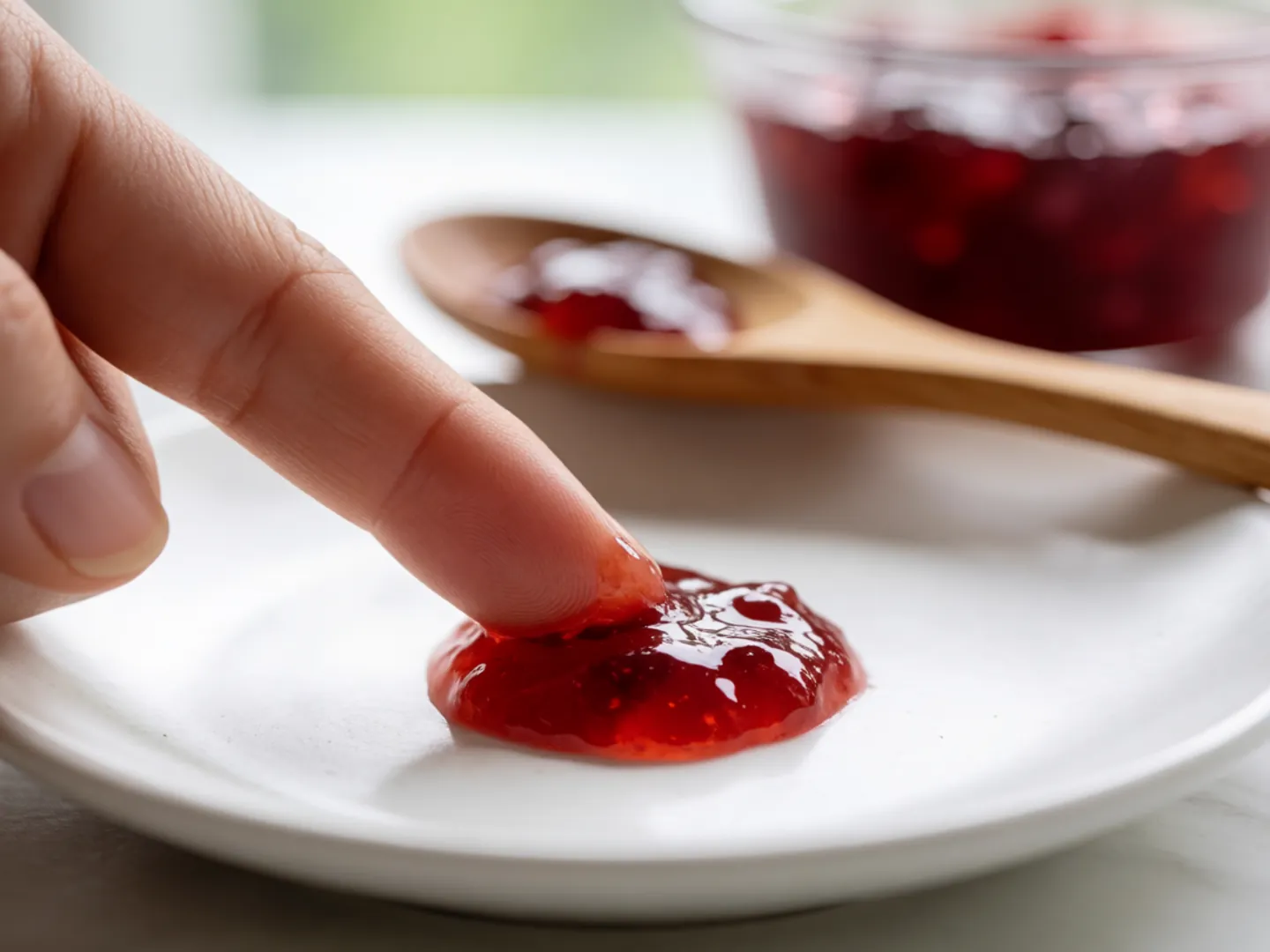
Take the pan off the heat, put a little jam on a plate in the freezer for a few minutes and see if it gels.
Do not move the jars for at least 12 hours. Some fruits take up to two weeks to set fully.
WHEN IT GOES WRONG
Runny jam usually means too little boiling, too little acid, the wrong sugar balance or too big a batch: the guidance suggests no more than 4 to 6 cups of juice at a time. Overcooking or too much pectin gives a stiff, tough set.
Crystals come from too much sugar or undissolved sugar on the pan side. Mould or moving bubbles mean spoilage: the guidance says to throw the whole jar away, not just scrape the top.
Questions
Strawberries are in the group of fruits that always need added acid, pectin or both. Undercooking, a too-large batch and too little acid can also leave jam soft.
Not in an ordinary recipe. Sugar is needed for the gel and is the preservative. For less sugar, use a tested reduced-sugar recipe with a low-methoxyl pectin, which gels with calcium instead of high sugar.
Acid is needed for the gel as well as flavour. When fruit is low in acid, lemon juice or citric acid is added to bring it up.
Water boils at a lower temperature higher up, so the set point drops too: about 2°F for every 1,000 feet above sea level.
For best quality, home-canned jams are best used within a year and stored somewhere cool, dark and dry. If there is any mould, discard the whole jar.
Sources
ABOUT THIS NAME
soundboardjam.com is part of the DoodleSale portfolio. It isn't in an auction right now, but you can ask about leasing it.